The useful bits, without the sales pitch
E-bike questions,
answered plainly.
There’s a baffling range of options, but you don’t need to find the universally “best” bike. On a budget, choose the cheapest one that fits you, suits your rides and has enough battery for your real distance. With more to spend, pay extra only for benefits you’ll genuinely value.
Choose a style
01 / BIKE TYPEI don’t know what type of e-bike to buy Start here
Choosing an e-bike can be a complete pain because there is so much on offer. I think it’s a bit like buying a car: you don’t have to keep it forever. I’ve been through loads of bikes myself.
Don’t worry too much about reliability; in reality, e-bikes are fairly simple machines. Beyond choosing one that fits your body and your comfort or mobility needs, I think the battery is the most important thing to consider.
Find one you really like that fits how you’ll use it. Try not to worry or overthink every option; you can compare bikes forever and never make a choice. Pick one and commit. If the cost feels too high, or worrying about theft would stop you enjoying it, an e-bike might not be for you.
Do I need a mountain bike just because I ride hills?
No. Most e-bikes can manage hills, though heavier bikes, including some fat bikes, may climb more slowly. A mountain bike is versatile if you want to ride on-road and off-road. The trade-off is that many have a hunched riding position, which may not suit you if you have neck or back problems.
Are fat-tyre e-bikes worth it, or are they just fun?
They’re fun, versatile bikes for both road and off-road riding. Their sturdy, workhorse build can take the knocks of daily road use, which is why they suit delivery work; many are also available with large batteries for long shifts. The upright riding position can suit people with back or neck issues who find a hunched-forward position uncomfortable.
The trade-off is size and weight: fat-tyre bikes can be very heavy and bulky compared with a mountain bike, and may climb hills more slowly. Battery size, frame and riding position vary by model.
Are cargo bikes worth it?
It depends on the size of your loads and how far you carry them. Cargo bikes are expensive, premium machines built to haul large loads, including on hilly routes; some can take two batteries for extended range. Their weight is the trade-off: lifting one into a van or carrying it upstairs is usually impractical.
A standard e-bike with a backpack or panniers is enough for ordinary shopping. A cargo bike is that carrying ability on steroids: it makes sense when you regularly move big loads over longer distances and have somewhere to park it.
Do I need a cargo bike to carry one child?
No. It depends on how you want your child to ride. Some mountain bikes can take a rear-mounted child seat. A front or crossbar seat lets a child sit between your arms; it can be a fun, less expensive option when the child is ready for that seat.
Some cargo-bike setups can carry two child seats and leave room for other loads. Check the exact bike and seat compatibility, load limits, and the seat maker’s age, weight and readiness guidance.
Will a hybrid cope with gravel and rough lanes?
Yes. A hybrid will cope fine with most gravel and country lanes. The choice is mostly about which setup you prefer: hybrids usually have narrower, smoother tyres that can feel faster on the road than a mountain or fat-tyre bike.
Those tyres can have less grip on loose gravel, but that rarely causes most riders a problem on ordinary lanes. There is no magical divide between the bike types; think about the riding feel you like and the surfaces you actually use.
Should I get a folding e-bike?
Folding bikes ride perfectly well. I’ve owned a few and usually only folded them to put them in a car or van. They can still be surprisingly bulky when folded, especially mountain- or fat-tyre models. If space is tight, look at a compact 20-inch-wheel folder and check its actual folded dimensions.
I’m shorter than average. What kind of bike might fit?
Don’t assume you need a mini bike: many hybrids and some mountain bikes come in sizes that fit shorter riders. If you’d prefer a more compact bike, options include 20-inch-wheel bikes, fat bikes and mini e-bikes with mid-width tyres.
Some smaller budget bikes can fit well but may not be built for years of hard daily use. Check the maker’s size guidance, load limit, warranty and battery support.
Spend with a reason
02 / BUDGETI want the cheapest bike that will do the job. What should I do?
Choose a bike style you like, then compare the best price and battery size you can get for your budget. If two bikes are very similar in price and both suit your rides, I’d go for the one with the larger battery, unless it pushes you beyond your budget.
As a useful starting point, aim for at least 48V and 10Ah if you can (about 480Wh). That can offer decent range, but actual distance varies with hills, load, riding conditions and assistance level.
Is it worth buying a second-hand e-bike?
It can be: you might find a real bargain. The main thing to allow for is the battery. People often sell an e-bike when its battery has started to degrade, so you may need to budget for a replacement or other upgrades sooner than you would with a new bike.
Before buying, check that you can source a replacement battery and other parts for that exact model. An established brand with a strong online presence may make future parts easier to find.
Will I be able to get my e-bike repaired?
It depends on the bike and what has gone wrong. A local bike shop can usually help with ordinary cycle parts such as gears, tyres and brakes, but don’t assume they’ll diagnose or repair the electrical system. With a recognised brand bought from a shop or online, you can usually contact the seller or manufacturer about servicing and electrical faults.
I had an electrical problem with my Moscow 48V and had to send the bike away in a huge box. It was a pain, but it got sorted. With an unfamiliar brand, you may have to rely on specialist e-bike repairers or online communities, so check what support and parts are available before you buy.
I have a big budget. What should I spend it on?
Choose the bike style and practical needs first. At the premium end, look for a quality mid-drive motor, a high-quality battery sized for your rides and a genuinely lightweight build. That’s what the extra spend should buy: a good motor and battery pack, plus lightweight components—not just an expensive badge.
There are too many choices. How do I narrow them down?
Choose a bike style you like the look of, that fits your needs and feels comfortable. You’ll spend a lot of time sitting on it, so pick something you actually want to ride. If you have neck or back problems, look for a position that lets you sit upright. Then focus on a decent battery for your journeys and a bike you’ll enjoy riding.
What should I check besides the sticker price?
Check the battery, because it determines how far the bike can go. A 48V setup can offer more range than a 36V one, but it usually costs more and weighs more. Don’t buy a cheap bike if its range won’t cover your rides; equally, if you only ride about 10 miles a day, you probably don’t need a massive, expensive battery.
Also check the estimated range for your use, servicing, warranty, and whether a replacement battery is available and affordable.
Battery, motor & hills
03 / SPECSHow big a battery do I actually need?
Work out how far you need to ride between charges, then use the range calculator on our site to estimate the battery size. Aim for about 20% more range than you need, so you have spare capacity for real-world riding.
As a rough planning estimate, allow for around 10% battery-capacity loss per year. A 20% buffer could cover about the first two years, but actual battery ageing varies with use and care; treat this as a rule of thumb, not a replacement deadline.
I only ride about 10 miles a day. Do I need the biggest battery?
If 10 miles is your whole day’s riding, most e-bikes sold in 2026 should manage it; even 36V/10Ah will usually be enough. You don’t need a massive battery for that distance. I’d prefer 48V/10Ah as a safer minimum if it fits your budget, but 36V/10Ah is probably fine if you need to keep the price down.
Hills, rider and luggage weight, cold weather and high assistance can reduce range, so leave some spare capacity if your route is demanding.
What happens if the battery runs out mid-ride?
Honestly, it can be miserable: many e-bikes are very hard to pedal once the battery is flat. They’re heavy and generally aren’t designed to ride like an ordinary bike without assistance. You might manage a short distance on the flat, but hills can be exhausting.
I used to test my 48V Moscow by riding it up a slight incline with no battery. I could manage about half a mile before I was completely knackered. Plan your range so you’re unlikely to get caught out.
Does a higher-watt motor mean a better e-bike?
No. More watts can mean more speed and assistance, but not automatically a better bike. In my experience, a 250W bike was fine on hills, just slower. My 750W bike was great fun for delivery work and quicker, but it still didn’t fly up hills, and riding it at full speed felt unsafe.
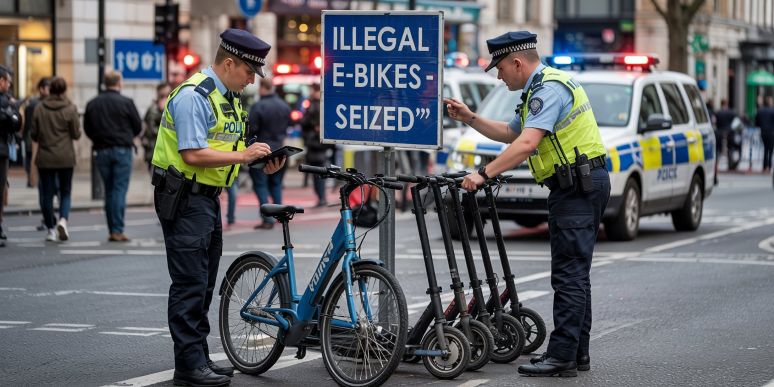
For an ordinary road-legal EAPC in Great Britain, continuous rated motor power must be no more than 250W and assistance must stop at 15.5mph. A bike outside those limits is treated as a motor vehicle and needs the relevant approval and registration, plus the required insurance and licence, for road use. An unregistered or uninsured bike can be seized.
Are all e-bikes pedal-assist?
Most e-bikes are pedal-assist: when you pedal, the motor kicks in to help take the strain. It can feel like pedalling against very little resistance.
Throttle bikes are available too, but don’t assume every one is legal to ride on public roads in the UK. A bike that can move without pedalling generally needs the relevant vehicle approval; some approved models can provide throttle assistance up to 15.5mph. Check the specific bike’s approval before you buy.
I have steep hills. What should I consider?
Most e-bikes will get you up hills, even very steep ones; the difference may be how slowly you climb. My 48V Moscow had 60Nm of torque and got me up massive hills at about 5mph. Smaller bikes can struggle more, and some will climb slower still.
If you have steep hills, check the motor’s torque in Nm as a useful comparison. More torque generally helps at low speeds and on climbs, but it doesn’t guarantee a particular speed; the bike’s weight, gearing, your load and the motor’s assistance setup matter too.
Should I pay extra for a removable battery?
Yes, a removable battery is useful: you can bring it inside to charge instead of hauling the whole bike indoors. Most modern e-bikes have one, so it may not cost extra. Check that it is designed to come off easily, especially if you cannot charge where the bike is stored.
Make it fit real life
04 / YOUR RIDESI deliver food. What kind of bike should I look for?
Fat bikes are a common delivery choice, and a step-through fat bike can be a good workhorse. You’re on the bike for hours, so the upright position can be more comfortable than a hunched mountain-bike position. Fat bikes are also often available with large batteries for long shifts. The trade-off is that they’re very heavy.
Delivery work is hard on a bike, so I wouldn’t spend £5,000 on one just to use it for deliveries. I used one for four years and about 3,000 miles; by the end, parts were coming loose and it was making all kinds of noises. Choose a sturdy, serviceable bike, make sure the battery covers your shift, and secure your delivery bag so it doesn’t affect handling.
I have back, neck or knee problems. What should I choose?
Look for a bike that lets you sit upright. Fat bikes often have this position, but they can be large and heavy. Smaller or medium-sized e-bikes with narrower tyres can also suit you, as can some compact 20-inch-wheel folders with decent-sized batteries. Choose the upright style that fits your needs; it doesn’t have to be a big fat bike or a hunched-over mountain bike.
I’m a heavier rider or carry a lot. Will an e-bike manage?
Generally speaking, yes. Extra weight shouldn’t put you off getting an e-bike. It can manage a heavier rider or a fair amount of luggage, though climbing hills may be slower. Every bike has a load limit, so check the limit for the specific model and include your luggage in the total.
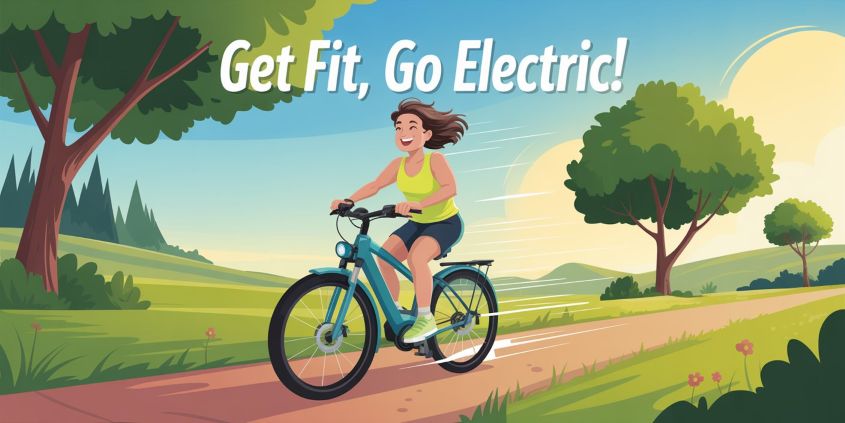
An e-bike can be a good way to get out and about while building your fitness.
Can I get fit riding an e-bike?
Yes. An e-bike can still be a workout. When I delivered food by e-bike, I was still knackered at the end of a shift. You’re still turning the pedals; the motor helps take the strain. I was quite fit, though not as fit as when cycling without assistance, so the idea that you can’t get fit on an e-bike is a bit of a myth.
Can I ride in heavy rain without damaging the bike?
Rain never caused an electrical problem on any of the e-bikes I’ve owned. The electrics on my Moscow 48V were sealed with silicone, and my fat bikes had a tightly weather-sealed compartment protecting the main electrical parts. The bikes got very dirty in wet weather, but with the bikes I’ve had, rain wasn’t something I worried about.
I live upstairs. Can I manage carrying an e-bike?
You may be able to manage it, but carrying a roughly 20 kg bike upstairs can become hard work and annoying very quickly. I used to lift my bike into the back of my van for deliveries. It only took about 30 seconds, but even that got frustrating after a while. Carrying it up stairs regularly is a bigger ask unless you’re very strong and fit.
It’s possible, but personally I’d try to avoid having to carry a heavy e-bike upstairs every day.
I want this to be my main transport. What am I likely to overlook?
The e-bike quickly becomes a fun, easy way to get around, but the everyday details can catch you out. Winter riding can be bitterly cold: I stopped when it got close to freezing. A reliable phone setup, carrying your things, finding secure parking and choosing a good lock can all take more thought than expected.
On the bike itself, you generally get what you pay for, so choose one that genuinely meets your needs and budget. Batteries don’t last forever; check that replacement batteries will be available and affordable, and that you can charge the bike where you keep it.
How do I stop my e-bike getting nicked, and should I insure it?
The honest answer is that you can’t guarantee it won’t be stolen. A good lock reduces the risk, but secure parking matters too, especially if you’ll leave the bike for a long time. Good locks can be expensive; some cost up to £100, and you may choose to use more than one. I insured my bike for around £25 a year. Online quotes can be much higher, so shop around.
I never had my bike stolen, but I did see people taking an unusual interest in it. Someone was checking it out when I went to the shop, and while I was delivering at McDonald’s someone else was watching it. When I went back to my bike, they walked away. I hadn’t left it there long, perhaps 30 minutes. If someone has time to watch a bike and plan a theft, there may be little a lock can do, so leave it somewhere secure whenever you can.
Will one bike do commuting, shopping and weekend trails?
Absolutely. If you choose the right bike, one bike can cover commuting, shopping and weekend trails. I started with a mountain bike, added rear panniers and used it on trails, for carrying food and for shopping. A backpack works too; bikes are very versatile.
Choose a style that suits the trails you actually ride, then add the carrying setup you need. After the initial purchase, bikes are very cheap to run; just allow for ordinary maintenance and, eventually, battery replacement.
No matching questions. Try a shorter search or choose another topic.